
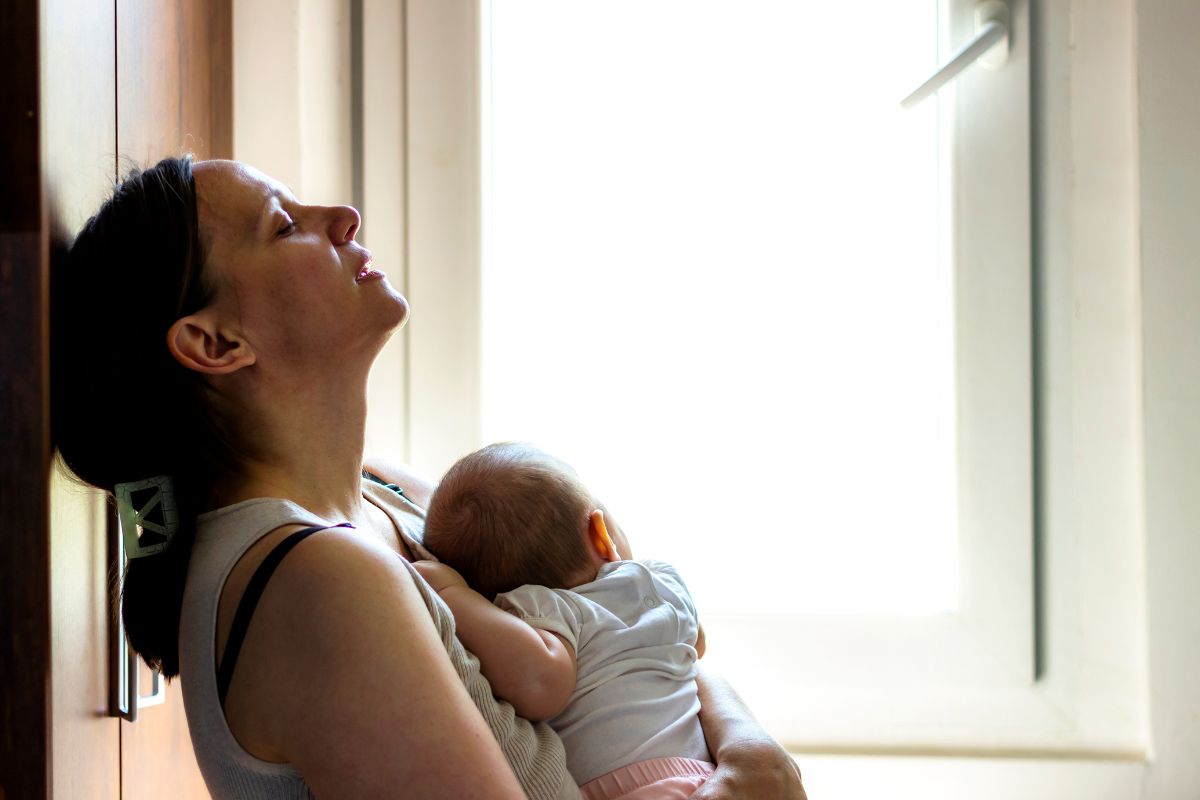
It is 6.30pm. Dinner is half made, someone needs a form signed for tomorrow, and someone else has picked this moment to tell you about a difficult day. You have been switched on since the alarm went off, and you will stay that way until the last person is asleep. Nothing has gone wrong. It is just an ordinary weeknight.
Then, standing at the bench, you notice something. You are not angry or upset. You just feel flat. You love your children, yet part of you would give a lot for one hour in which nobody needed you. And the moment that thought arrives, a second follows close behind: what kind of parent thinks that?
If this is familiar, you are in good company. In this article, we explain what parenting burnout is, why it is so often kept quiet, what it can look like day to day, and when it may be worth reaching out for support.
What is parenting burnout?
Researchers use the term “parental burnout” for exhaustion that comes specifically from the parenting role. In a 2017 study published in Frontiers in Psychology, researchers describe three parts: exhaustion, a sense of being ineffective as a parent, and emotional distancing. In everyday terms, that can mean being there in body but running on autopilot.
The same study found only low to moderate links between parental burnout and work burnout, general parenting stress or depression. That suggests it is its own experience, even though they can overlap. For the wider picture of burnout, see our articles Burnout Is More Than Being Tired: Understanding and Recovering from Burnout and The Difference Between Stress, Exhaustion and Burnout.
How common is it? Estimates vary with how burnout is measured and who is surveyed. The 2017 study put the proportion of parents with burnout somewhere between 2% and 12%, and a study of 17,409 parents in 42 countries (Affective Science, 2021) found that rates differed dramatically between countries.
Burnout at that level appears to affect a minority of parents. Feeling stretched is far more common. The Parenting Research Centre’s Parenting Today in Victoria survey reports, across its 2019 and 2022 rounds, that 42% of mothers and 34% of fathers felt too tired to be the parents they want to be, and that 47% of parents felt they did not have enough time to get everything done. The same survey reports that 90% of parents find parenting rewarding.
Why parenting can be so depleting
Most demanding roles have edges. A shift ends, a project closes, a weekend arrives. Parenting often has none of these. The work is physical, emotional and mental. The mental part is often called the mental load: the constant background tracking of appointments, school notes, birthday gifts and who needs what by when.
Add broken sleep, little time alone and little recognition, and reserves can drain without much notice. The Australian Psychological Society notes that stress can be cumulative, building when several demands pile up without time to recover. Parenting can fit that for long stretches.
Why it is so hard to admit
Ask a parent how they are, and most will say “good, busy”. Few say “running on empty”. There are understandable reasons.
- Guilt. Parenting comes with a strong picture of what “good” looks like: patient, present, grateful. Feeling depleted can seem like proof you fall short of it. It is not. Feeling drained by something you care about is not a lack of love. It can be a result of giving a lot for a long time with little chance to refill.
- Fear of judgement. Being honest can feel like admitting you are not cut out for this, or inviting advice you did not ask for.
- Identity. Parenting can take up so much room that other parts of you, the friend, the colleague, the person with interests of your own, go quiet. Missing them can feel disloyal, so it goes unsaid.
- Self-reliance. Many capable people are used to being the one who copes. In the 42-country study, parental burnout was more common in individualistic cultures, which place a high value on personal independence, and the authors suggest those values may put parents under added stress. The pressure to manage alone is not only personal.
What parenting burnout can look like day to day
Not everyone will recognise all of these. Many parents describe the following.
Emotional
- Feeling flat, or going through the motions of the day without feeling much
- A shorter fuse than usual, often followed by guilt
- Dreading the busiest parts of the day, such as the after-school stretch or bedtime
- A sense that you are no longer the parent you want to be
Physical and mental
- Tiredness that sleep does not fix, even on nights when everyone sleeps
- Brain fog, forgotten appointments or trouble with small decisions
Behavioural
- Wanting time alone more than almost anything
- Pulling back from friends, or leaning on screens or alcohol to switch off
- Losing interest in things you used to enjoy
These are general patterns, not a checklist or a diagnosis. Some of them overlap with low mood, anxiety and physical health conditions, which is one reason it helps to have the whole picture looked at.
When is it worth seeking support?
You do not need to be at breaking point to ask for support. The Better Health Channel notes that anyone facing a mental health issue or a life concern can seek counselling. It may be worth speaking with someone if:
- these signs have been present for more than a few weeks
- rest, a quiet weekend or a good night’s sleep no longer restores you
- guilt, irritability or flatness are taking up a lot of space in your day
- you are managing everything on the surface but running on empty underneath
The Australian Psychological Society says that if stress is affecting your ability to enjoy life, a psychologist may be able to help. Beyond Blue’s guidance for parents notes that parents don’t have to get everything right, and encourages them to seek support from others when they need to, which can be good for their wellbeing.
A GP is a good place to start, as a medical check-up can help rule out other health causes for how you feel. You are welcome to book an appointment directly as a private client without a referral. If you wish to claim Medicare rebates, you will need a valid referral and Mental Health Treatment Plan from your GP prior to your session.
Some parents want a space that is entirely theirs, where nobody needs anything from them. Therapy can be one way to have that. Cognitive Behavioural Therapy (CBT) can help you examine unwritten rules such as “a good parent never needs a break”. Acceptance and Commitment Therapy (ACT) focuses on what matters to you, as a parent and as a person, and on learning to make room for hard feelings such as guilt. A psychologist can work out with you what fits.
If you need to talk to someone straight away, Lifeline is on 13 11 14 (24 hours). In an emergency, call 000.
Talking to the Team at The Avenue Place
At The Avenue Place, our registered psychologists work with adults, children and adolescents, including parents who are feeling stretched thin. We support clients from Berwick, Narre Warren, Beaconsfield, Officer, Clyde North, Pakenham, Cranbourne and surrounding suburbs, and telehealth appointments are available for clients across Victoria.
We welcome you to get in touch. Our reception team is happy to answer any questions about our fees, rebates, and finding the right fit for your needs.
This article provides general information only and is not a substitute for individual professional advice. If you have concerns about your health or wellbeing, please speak with your GP or another registered health professional.